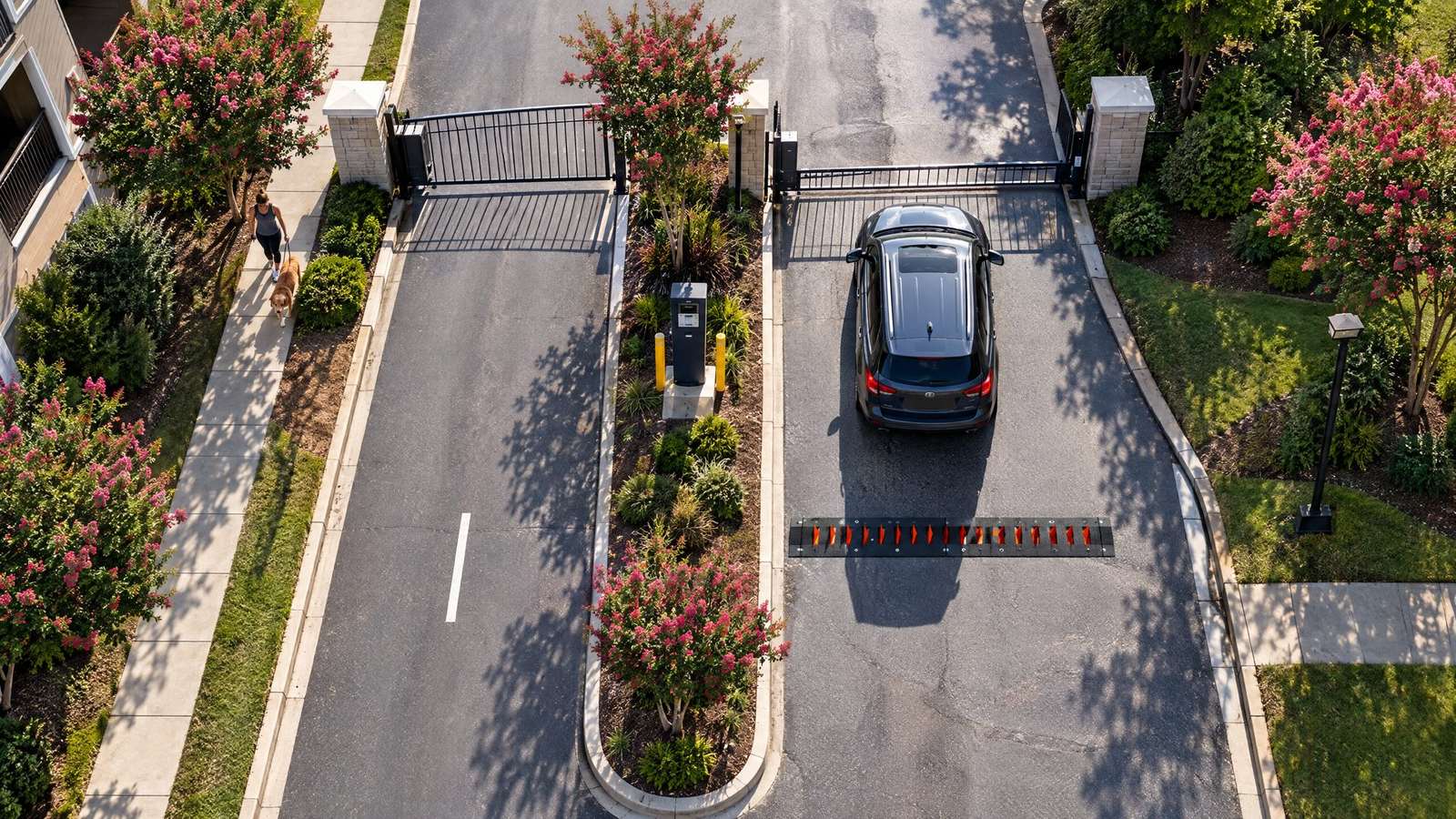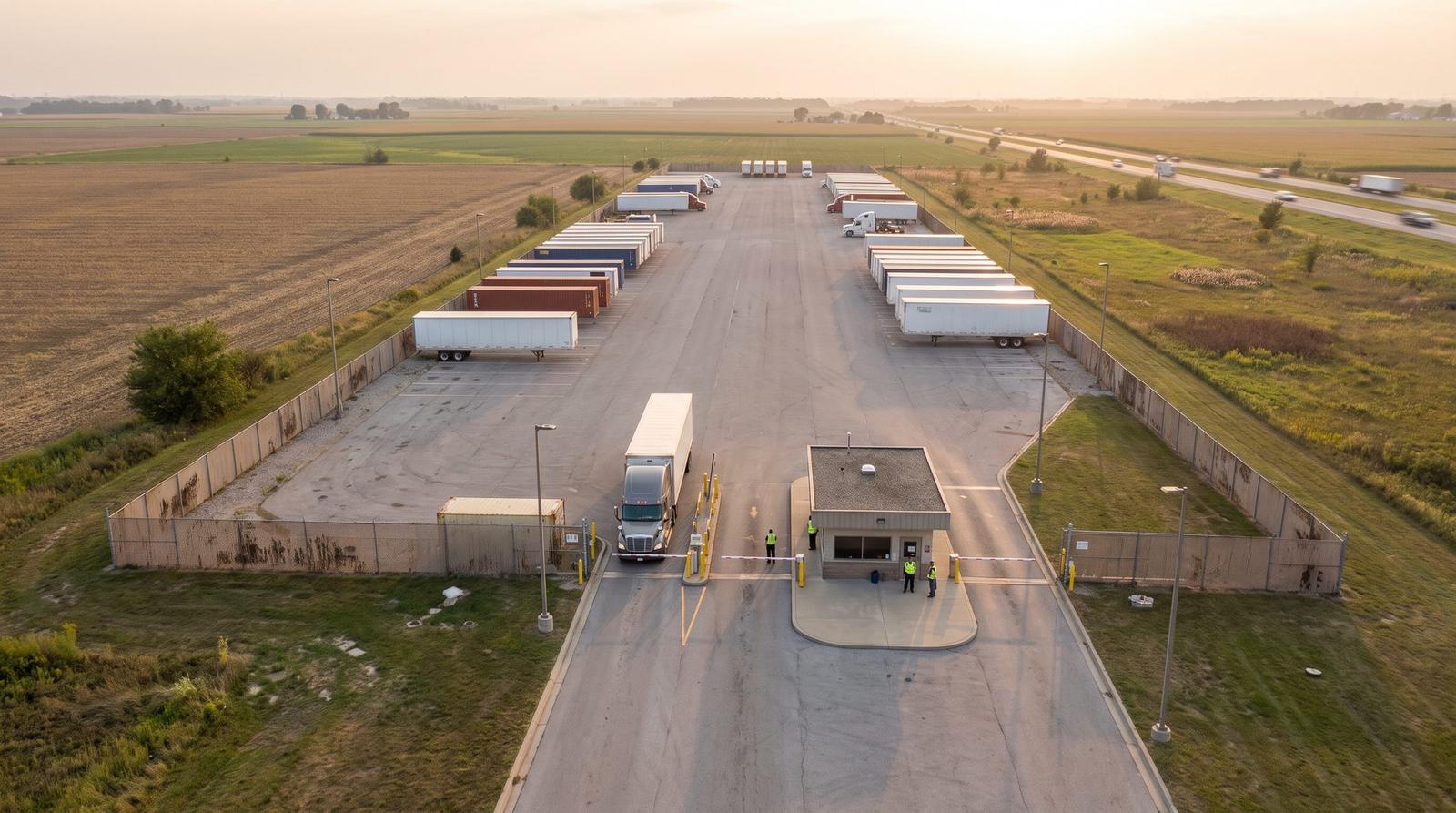
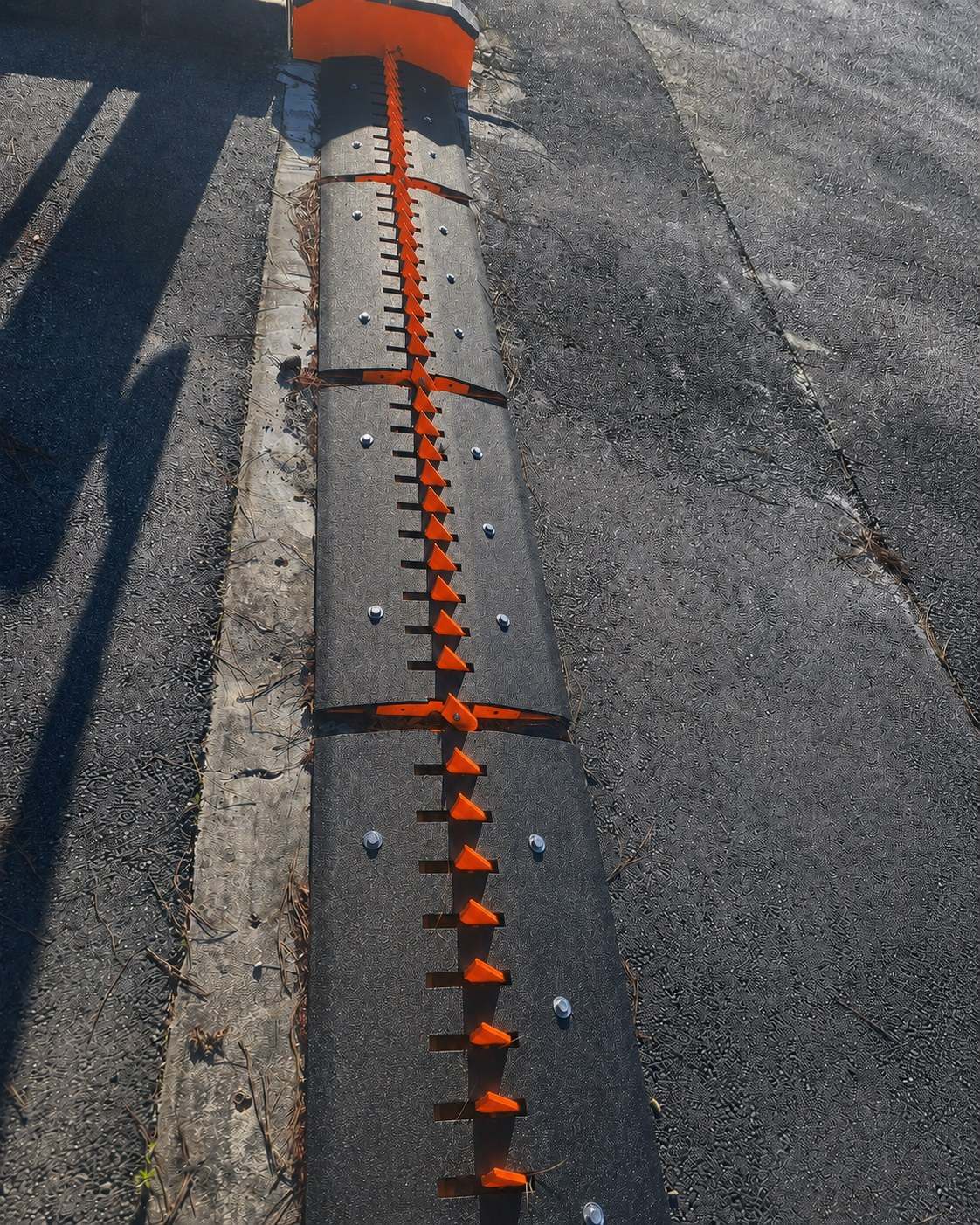
The first thing you are going to want to consider when purchasing road spikes is the form factor of the spike itself. The most common form factors are surface-mounted and in-ground (flush-mounted) control spikes. Deciding between the two is really a matter of priorities, because each style has pros and cons that usually sway customers one way or the other. Below are the most common considerations we hear from our customers, so you can be better equipped to decide which option is best for you.
Surface-Mounted Spikes: Pros
- Fast, low-cost installation. Surface-mounted units bolt directly to sound concrete or asphalt — no excavation, no concrete work, no extended lane closure. Most installations are completed in hours, not days.
- Relocatable. If your traffic pattern changes, the unit can be unbolted and moved to a new lane or a new property entirely.
- Visible deterrent. The raised housing and spikes are clearly visible to approaching drivers, which stops most wrong-way attempts before tires ever touch steel.
- Simple maintenance access. Every component is above grade, so inspections and spring changes are straightforward.
Surface-Mounted Spikes: Cons
- Higher profile. The housing sits proud of the road surface, so vehicles cross a raised hump. Very low-clearance vehicles need to slow down and cross squarely.
- Visual impact. The same visibility that deters intruders may not suit properties where aesthetics come first.
- More exposure to the elements. Above-grade hardware takes weather and traffic contact directly, so it should be inspected on a regular schedule.
Flush-Mounted (In-Ground) Spikes: Pros
- Clean, low-profile finish. The frame is set into the roadway so only the spike blades interrupt the surface. Ideal for upscale entries, luxury properties, and any site where appearance matters.
- Friendly to low-clearance vehicles. With the housing below grade, sports cars and lowered vehicles pass over safely in the correct direction.
- Protected hardware. The mechanism is shielded within the roadway, reducing exposure to weather and plow or traffic strikes, which generally extends service life.
Flush-Mounted (In-Ground) Spikes: Cons
- Bigger installation. In-ground systems require excavation and concrete work, which means higher upfront cost and a longer install window.
- Permanent placement. Once set, relocating a flush-mounted system is impractical — plan lane positions carefully before the pour.
- Drainage matters. The recessed frame needs proper drainage (and in freezing climates, ideally a heating grid) to keep water, ice, and debris from interfering with operation.
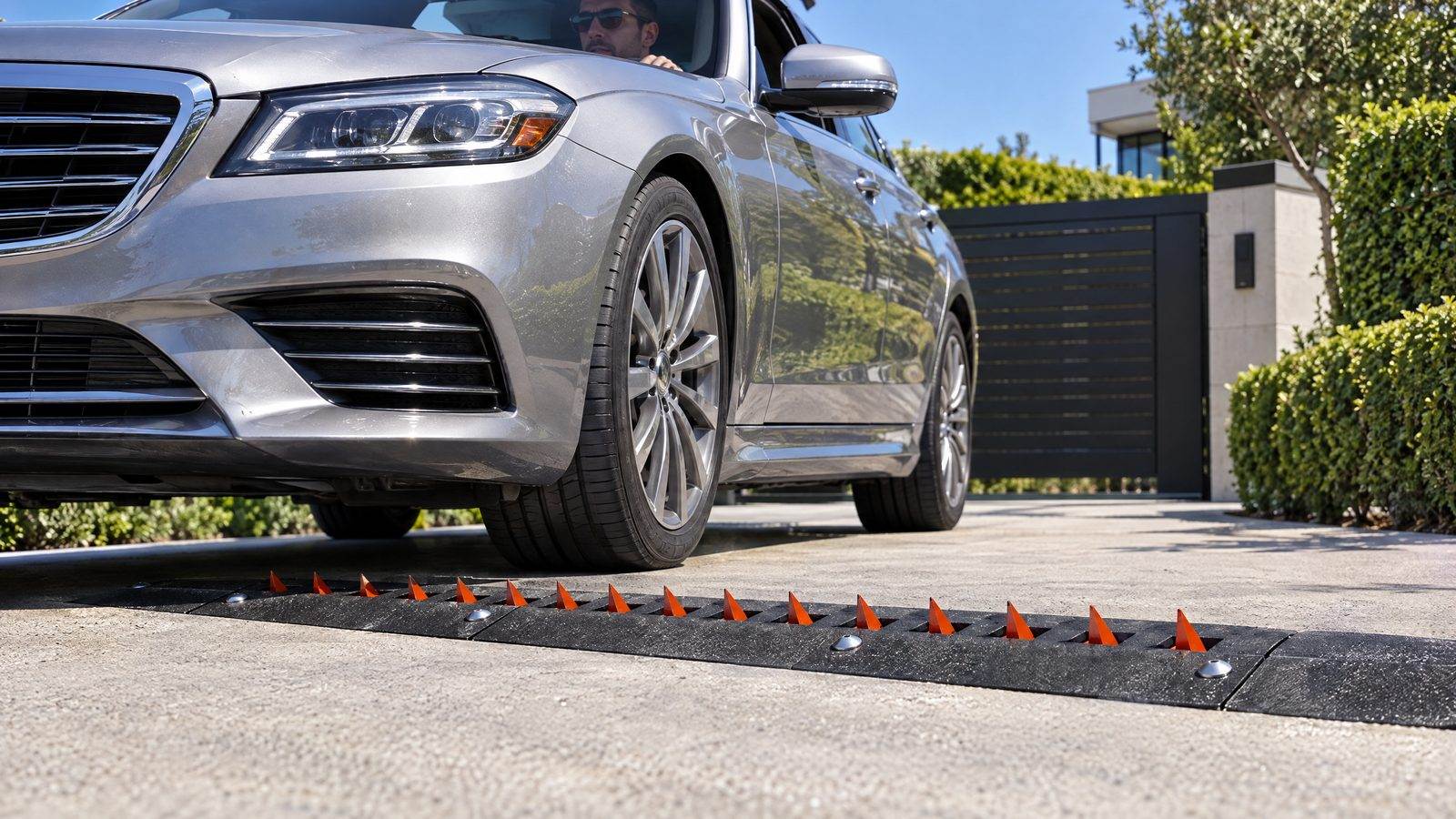
How to Decide
Choose surface-mounted when speed of deployment, budget, visibility, or future flexibility lead your priorities — typical for parking operations, distribution facilities, and sites that may reconfigure. Choose flush-mounted when the installation is permanent, the entry serves low-clearance vehicles, or a discreet appearance is part of the property's standard — typical for gated communities, luxury properties, and high-security facilities.
Both form factors are available in passive one-way and motorized configurations, and both integrate with gate arms and access control systems. If you're weighing the two for a specific entry, send us the lane details — we'll size, spec, and quote the right system, usually the same business day.